Drivers View Of The Road
Form Number: DVT 908
Issue: 6
Origin: DVT
Review: Jan 2028
Information
‘Official’ Stickers
‘Official’ stickers which are not readily removable – such as vehicle licences, parking and access permits – are only a reason for rejection if they seriously restrict the driver’s view. ‘Official’ stickers should be taken to be any sticker which is used in connection with ‘road enforcement’, ‘security’ or ‘crime prevention’ matters.
These include: Disabled persons Badges/Permits, Parking Permits, Licences and Vehicle Anti-Theft Scheme stickers issued by a Police Authority.
Opaque Edging
Opaque edging on a windscreen (usually black particularly at the lower edge) found on some modern vehicles is not to be regarded as part of the windscreen when assessing the drivers view through the windscreen.
Additional Opaque Films
Additional opaque films whether fitted on the inside or outside of the windscreen, which obscure the driver’s view of the road, are to be considered a reason for rejection if it meets the fail criteria.
Wiper Blades
Wiper blades that park automatically in a position that obscures the view through the windscreen is a reason for rejection.
Additional Mirrors
Additional mirrors are not subject to a Reason for Rejection.
Windscreen
This inspection applies to all vehicles (including those with opening windscreens).
Temporary Windscreens
Temporary windscreens are not intended for everyday use. A temporary windscreen fitted to a vehicle presented for test is to be a reason for rejection.
Repaired Windscreens
Repaired windscreens must be inspected to the same test criteria as original unrepaired windscreens. Repairs must be judged solely on the basis of whether they interfere with vision. An ‘invisible’ or barely detectable repair, finished flush with the surrounding glass, does not count as damage even if it exceeds the limit on damage allowed in the test. If these criteria are met, the position and size of repairs is not relevant for the purposes of the test.
Scratches
Scratches on the windscreen, i.e., light surface scratching, is not to be considered as damage. However, an area of concentrated scratching such as caused by the prolonged use of a defective wiper blade which obscures vision is to be considered a reason for rejection if it meets the fail criteria.
Windscreen Protection
Windscreen protection or additional strengthening support fitted to vehicles which have a security role, e.g., bullion vehicles, Post Office vehicles, etc. intended to aid security, are not to be considered a reason for rejection when assessing obstructions to vision, also their windscreens and windows may be constructed of either safety glass or safety glazing.
Sunvisors
A sunvisor which cannot be stowed in the ‘off screen’ position and which drops down obstructing the driver’s view through the swept area of the windscreen, is to be considered a reason for rejection if it meets the fail criteria.
Type of Glass and Light Transmission
| Item | Windows | Type of Glass | Light Transmission |
|---|---|---|---|
| 1 | Windscreens and other windows wholly or partly on either side of the drivers seat fitted to motor vehicles first used before 1st June 1978 NOTE: This requirement only applies where glass is fitted. | Safety glass, or Specified safety glass, or Specified safety glass (1980) | No requirement |
| 2 | Windscreens and other windows wholly or partly on either side of the drivers seat fitted to motor vehicles first used on or after 1st June 1978 but before 1st April 1985 | Specified safety glass, or Specified safety glass (1980) | 70% |
| 3 | Windscreens and other windows wholly or partly on either side of the drivers seat fitted to motor vehicles first used on or after 1st April 1985 | Specified safety glass (1980) (These side windows may be safety glazing if the vehicle has been issued with a Department’s Approval Certificate) | Windscreens 75% (70% if the vehicle has been issued with a Department’s Approval Certificate) All other windows 70% |
| 4 | All other windows | Safety glazing, or Specified safety glass, or Specified safety glass (1980) | No requirement |
To help identify the type of glass fitted see note on acceptable markings.
The visual transmission for light is very difficult to assess, the colour of tinting can be very deceiving and therefore it is only to be regarded as a reason for rejection if it is very obvious that the light transmission is less than the legal requirement. A Light Transmission Meter may be used where necessary to assist examiners in their assessment.
Using a glass sample, compare with the window and assess the light transmission.
Taxi Signs
Taxi signs displayed in the front windscreen of Hackney Carriage vehicles of the type used to indicate when the vehicle is ‘for hire’ (usually by being illuminated) are only a reason for rejection if they seriously restrict the driver’s view.
Grooved Windscreens
Grooves in the windscreens which are designed specifically to clean the wiper blades are not a reason for rejection unless they seriously impair the driver’s view of the road.
Mascots
Mascots and other external mountings forward of the windscreen are not part of the test in respect of drivers view but are included as part of the general condition of the vehicle.
Original Design
Original vehicle design characteristics are to be accepted.
Where Items Are Present In The Driver’s View
(such as a sat nav, air freshener etc.) that would justify a Reason for Rejection, the examiner may, at their discretion, ask the customer to remove the items prior to the inspection.
Acceptable Markings
| Standard | Windscreens | All Other Windows | Notes |
|---|---|---|---|
| BS857 "Specified Safety Glass" | Kite Mark or "BS857: 1967" plus either "Z", "Z1", "Z2" or "WHP" | Kite Mark or "BS857: 1967" plus either "L", "Laminated", "T", "CHT", "F", "Float", "P", "Plate", "S", "Sheet", "C", "Compo", "Commercial" of "HP" | "T" = Heat treated toughened glass"CHT" = Chemically toughened safety glass*Not acceptable on vehicles first used after 31 March 1985. |
| BS5282 "Specified Safety Glass" | "BS5282" plus either "WT", "WL", "Laminated Windscreen", "WLT" or "Treated Laminated Windscreen". | BS5282" plus either "T" "Tempered", "Toughened", "L" or "Laminated" | *"Not acceptable on vehicles first used after 31 March 1985 |
| BS857 as amended "Specified Safety Glass (1980) | "BS857-2: 1967" plus either "Z", "Z1", "Z2" or "WHP" | Kite Mark or "BS857: 1967" plus either "L", "Laminated", "T", "Toughened", "Tempered", "CHT", "F", "Float", "P", "Plate", "S", "Sheet", "C", "Compo", "Commercial" or "Hp" | "CHT" = Chemically toughened glass. Glass marked "W" is NOT permitted on Public Service Vehicles. |
| BSAU178 "Specified Safety Glass (1980)" | "BSAU178" plus either "WL", "WL", "Laminated Windscreen", "WLT" or Treated Laminated Windscreen" | "BSAU178" plus either "T" "Tempered", Toughened", "L", or "Laminated" | Glass marked "W" is NOT permitted on Public Service Vehicles |
| ECE43 "Specified Safety Glass (1980) | A circle surrounding the letter E and the distinguishing number of the country which has granted approval. The number 43 followed by the letter R, a dash and the approval number to the right of the circle plus either "I", "II" or "III", for example 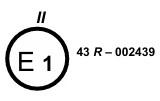
| A circle surrounding the letter E and the distinguishing number of the country which has granted approval. The number 43 followed by the letter R, a dash and the approval number to the right of the circle, for example 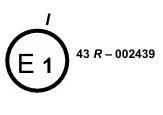
| The roman numerals may be above, below or to the left of the circle but NOT to the right of it. "I" = Toughened glass windscreen "II" = Ordinary laminated glass windscreen "III = Treated laminated glass windscreen Not acceptable as a windscreen without the above marks |
| 92/22EEC | A rectangle surrounding the letter "e" and the distinguishing number of the country which has granted the approval. Above the rectangle the roman numeral II, III or IV. Below the rectangle, the serial number of the certificate e.g. 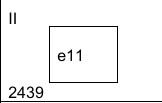
| A rectangle surrounding the letter "e" and the distinguishing number of the country which has granted the approval. Above the rectangle the roman numeral V, VI. Below the rectangle, the serial number of the certificate e.g. 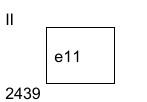
| The roman numerals may only be above the rectangle "II" = Laminated Glass "III" = Treated Laminated Glass which is not coated "IV" = Plastic Glass "V" = Regular light transmission of less than 70% "VI" = Double Glazed |
| Glass manufactured in France (C&U 32(9)) | "TP GS" or "TP GS E" | "TP GS" or "TP GS E" | Not acceptable on vehicles first used after 30 September 1989 |
| Non-European Acceptable markings | AS1, AS10 11-4-21 JIS R3211 11-4-27 JIS R3211 SABS 1191 SABS 1193 | AS1, AS2, AS10, AS11A, 11-4-21 JIS R3211 11-4-27 JIS R3211 SABS 1191 SABS 1193 | Note: other acceptable standards for windows behind the drivers seat are AS3, AS14, AS15, AS16. |
Note: BS 6206 or BS EN12600 (Builders Glass) is not acceptable
Method Of Inspection
• Sit in the driver’s seat and check that there is a reasonable view of the road through the windscreen and windows wholly or partly on either side of the driver’s seat.
• Check presence and security of all windscreens, side, roof or rear windows, or internal screens or partitions.
• Visually check the condition of all windscreens, internal screens and partitions, side, rear, roof and door windows for cracks, discolouration, surface damage and correct material.
• Check for presence, security and condition of guard rails or barriers at windows, internal screens or partitions.
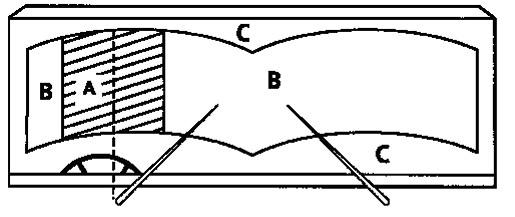
• When checking the windscreen refer to the diagram below.
• Zone "A" is 290 mm wide, in the swept area of the screen and centred on the centre of the steering wheel.
• Zone "B" is the remainder of the swept area.
• Damage or discoloration will be a reason for failure if it impairs the driver's view of the road.
• Examiners should have regard for the two separate "zones" when assessing damage or discoloration. A greater amount of damage or discoloration could be accepted in zone "B" than in zone "A".
Reason For Rejection
| Reason For Rejection | Deficiency Category | ||
|---|---|---|---|
| 1 | a | An obstruction within the driver’s field of view that affects the view in front or to the sides outside the swept area of the windscreen. | MINOR |
| b | An obstruction significantly affecting the driver’s view of the road through the swept area of the windscreen. | MAJOR | |
| c | Any crack, surface damage or discoloration, but which does not restrict the driver’s view of the road to the front or side. | MINOR | |
| d | Any crack, surface damage or discoloration which seriously restricts the driver’s view of the road to the front or side. | MAJOR | |
| e | With any crack where there is noticeable displacement of the surfaces on either side which has an adverse effect on the condition and operation of the windscreen wipers. | MAJOR | |
| 2 | Any windscreen, window, internal screen or partition so insecure that it is likely to fall out in normal use or cause injury to any person on the vehicle. | MAJOR | |
| 3 | A crack or surface damage in glass or other transparent material that presents a danger to any person on the vehicle. | DANGEROUS | |
| 4 | A guard rail or barrier at a window, internal screen or partition missing, insecure or damaged to the extent that injury to passengers is likely. | MAJOR | |
| 5 | Glass used for a windscreen or an outside window is obviously not safety glass. | MAJOR | |
| 6 | a | The windscreen and/or other windows wholly or partly on either side of the driver’s seat are not made from safety glass | MAJOR |
| b | The windscreen and/or other windows wholly or partly on either side of the driver’s seat where the light transmission is obviously less than the legal requirement | MAJOR | |
| c | All other windows not made from safety glass or safety glazing. | MAJOR | |
| 7 | A window forming part or all of a screen, partition or door in the interior of the vehicle not made from safety glass or safety glazing. | MAJOR | |
| 8 | Windscreens and other windows wholly or partly on either side of the driver’s seat missing where fitted as original equipment. | MAJOR |